
Private Jet Charter William P. Hobby
Private jet charter William P. Hobby starts with one runway number: 7,602 ft. HOU sits just 46 ft above sea level southeast of downtown. Six FBOs compete for your flight here.
- KHOU · HOUairport codes
- 46 ftfield elevation
- 7,602 ftlongest runway
- 10 mifor Downtown Houston
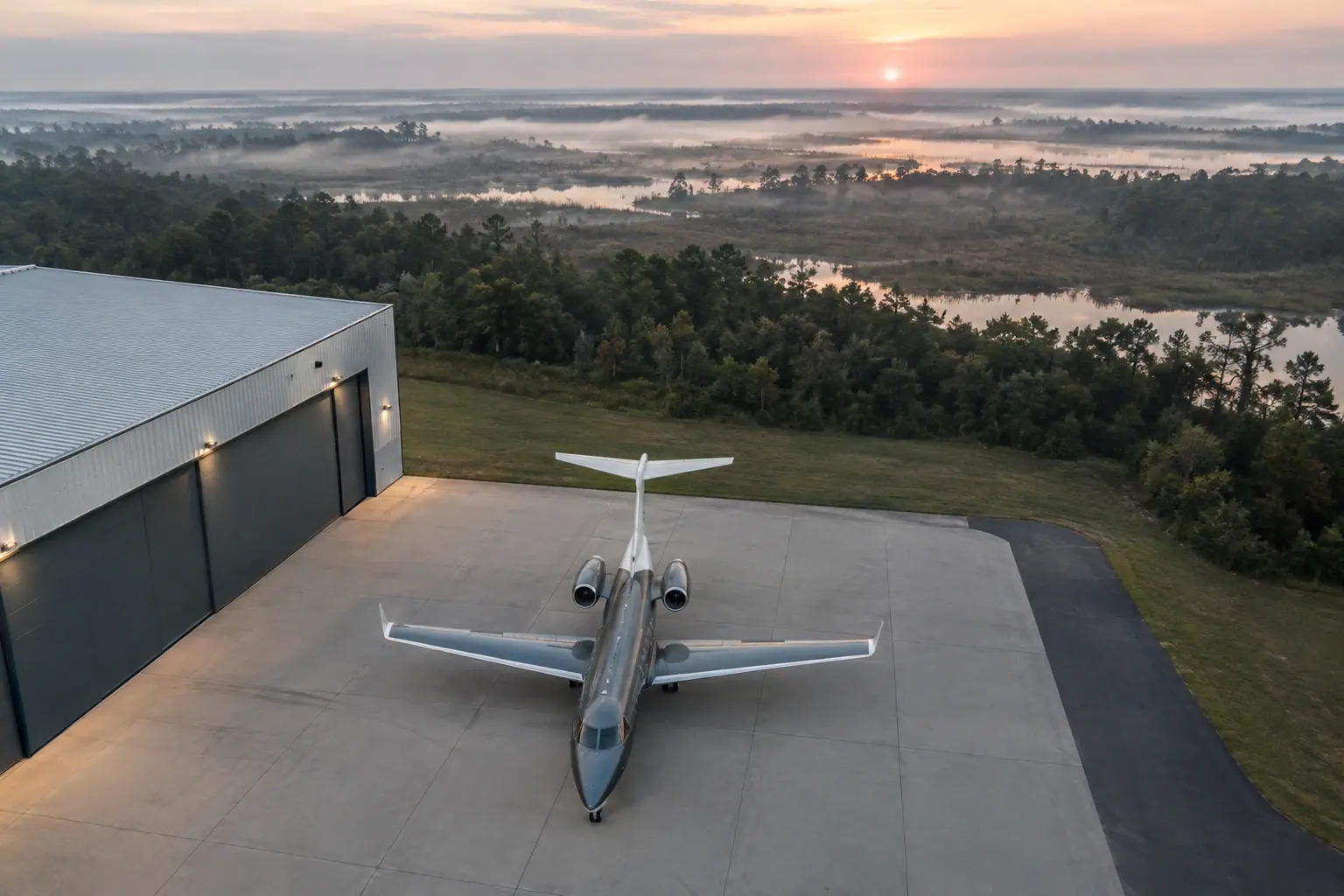
Private jet charter William P. Hobby runs through KHOU, the close-in field on the southeast side that most Houston travelers know simply as Hobby. The airport sits at 46 ft elevation, and its longest runway measures 7,602 ft. Those two figures explain much of why the field works so well for light and midsize aircraft on regional and transcontinental routes. From the terminal curb you are roughly seven miles from downtown, which puts the theater district, the Texas Medical Center and the museum district within a short drive rather than a freeway haul.
The field has a deeper history than many passengers realize. Hobby was Houston's main commercial airport before Intercontinental opened in the 1960s, and the name honors William P. Hobby, a former Texas governor and newspaper publisher. Today the field mixes scheduled airline traffic with general aviation, so business aircraft share a towered environment with 737s and 717s. That density is manageable because the airport has six separate FBOs handling private traffic, giving brokers real choices on parking, fuel and ramp space during busy weeks such as the Houston Livestock Show and Rodeo in March.
For comparison shoppers, the Houston basin offers three other fields: Ellington Airport with a 9,001 ft runway, Sugar Land Regional at 8,000 ft, and George Bush Intercontinental with 12,001 ft. The runway figures matter less than the mission. A light jet bound for Dallas or Austin rarely needs more pavement than Hobby provides. The numbers you should watch are the seasonal density altitudes, because summer heat changes takeoff performance on every field in Southeast Texas.
Understanding who does what keeps the booking clean. This site is a charter broker. The flights themselves are flown by FAA Part 135 operators, and those operators hold operational control of each trip, including crew scheduling and dispatch. Brokers act as agents under DOT Part 295 authority when arranging the flight. That separation is normal in private aviation and worth knowing when you compare quotes from several sources.
Runway and summer performance figures
Hobby's longest runway stretches 7,602 ft at just 46 ft field elevation, so density altitude is the variable that actually limits performance. In January the high averages 62F and density altitude sits near 300 ft, which is close to a no-penalty day. By July, with highs near 91F, that figure climbs to about 2,200 ft, and on a peak 115F afternoon the charted density altitude reaches roughly 2,800 ft. If your departure falls in that window, then a lightly loaded light jet may still be fine while a heavier midsize jet on a long leg needs a performance review before the operator confirms the trip. A private jet flight from William P. Hobby in August can face a 2,300 ft density altitude penalty, which is why operators run weight-and-balance numbers rather than quoting from a brochure.
| Runway | Length | Width | Surface |
|---|---|---|---|
| 04/22 | 7,602 ft | 150 ft | Concrete |
| 13R/31L | 7,602 ft | 150 ft | Asphalt |
| 13L/31R | 5,148 ft | 100 ft | Concrete |
Six FBOs compete for your drop-off
Six FBOs serve general aviation at William P. Hobby Airport: Wilson Air Center, Million Air Houston, Jet Aviation Houston, Atlantic Aviation, Signature Aviation and Henriksen Jet Center. Choosing among the six FBOs at William P. Hobby shapes your ground time more than the flight itself, since each has its own ramp layout and access to the airline side of the field. Ask which one your operator is contracted with before you set a pickup time.
Not every operator has accounts at every FBO, so the quote you receive should name the facility handling your arrival or departure. If you are connecting to a scheduled flight on the commercial side, then a shorter ramp-to-terminal transfer matters more than fuel pricing. CBP clearance for international legs is arranged through the operator and the FBO, not the broker.
What Hobby is best for
- Business travel to downtown, the Medical Center and the Energy Corridor, all a short drive from the southeast side
- Light and midsize jets on regional legs to Dallas, Austin and San Antonio, where 7,602 ft of runway is plenty
- Trips timed around the Houston Livestock Show and Rodeo and other citywide events, when six FBOs give brokers room to maneuver
- Transcontinental legs of roughly 1,235 miles to Los Angeles, where the operator chooses fuel stops and loads around summer density altitude
| Class | Typical runway need | Here |
|---|---|---|
| Turboprop | 3,300 ft+ | Fits |
| Light jet | 4,000 ft+ | Fits |
| Midsize jet | 5,000 ft+ | Fits |
| Super-midsize jet | 5,200 ft+ | Fits |
| Heavy jet | 5,600 ft+ | Fits |
Heat and density altitude by season
Hobby's density altitude ranges from roughly 300 ft in January to about 2,300 ft in August, tracking the monthly highs almost exactly. Spring is wet as well as warm, with 14 to 16 wet days a month from March through June, so afternoon thunderstorms can push departure slots around. Summer afternoons at William P. Hobby are the main performance constraint on light jets, and a 115F peak day pushes density altitude to about 2,800 ft. Operators factor that into fuel loads and runway requirements long before you board.
The tradeoff is a mild winter. December highs average 67F with density altitude near 600 ft, which means holiday-week departures from Houston to Chicago or New York rarely run into performance limits. If your trip is time-sensitive, then booking a morning departure in July or August gives the crew cooler pavement and more margin.
| Month | Avg high | Wet days | DA figure |
|---|---|---|---|
| Jan | 62°F | 11 | 300 ft |
| Feb | 67°F | 12 | 600 ft |
| Mar | 73°F | 14 | 1,000 ft |
| Apr | 78°F | 14 | 1,300 ft |
| May | 84°F | 16 | 1,700 ft |
| Jun | 89°F | 16 | 2,100 ft |
| Jul | 91°F | 16 | 2,200 ft |
| Aug | 92°F | 16 | 2,300 ft |
| Sep | 88°F | 14 | 2,000 ft |
| Oct | 81°F | 10 | 1,500 ft |
| Nov | 71°F | 11 | 900 ft |
| Dec | 67°F | 11 | 600 ft |
Getting to the airport and onward
Hobby sits about seven miles southeast of downtown, reached by Interstate 45 and the Gulf Freeway, with the airport's driveway signs taking you directly to the general aviation side. If you are arriving by car service, then allow extra time during rodeo weeks and weekday rush hours on the freeway. Ellington Airport, about 1,200 miles to Los Angeles on the same kind of route profile, offers the 9,001 ft runway for heavier long-haul aircraft if Hobby's numbers do not suit your mission.
Routes via William P. Hobby
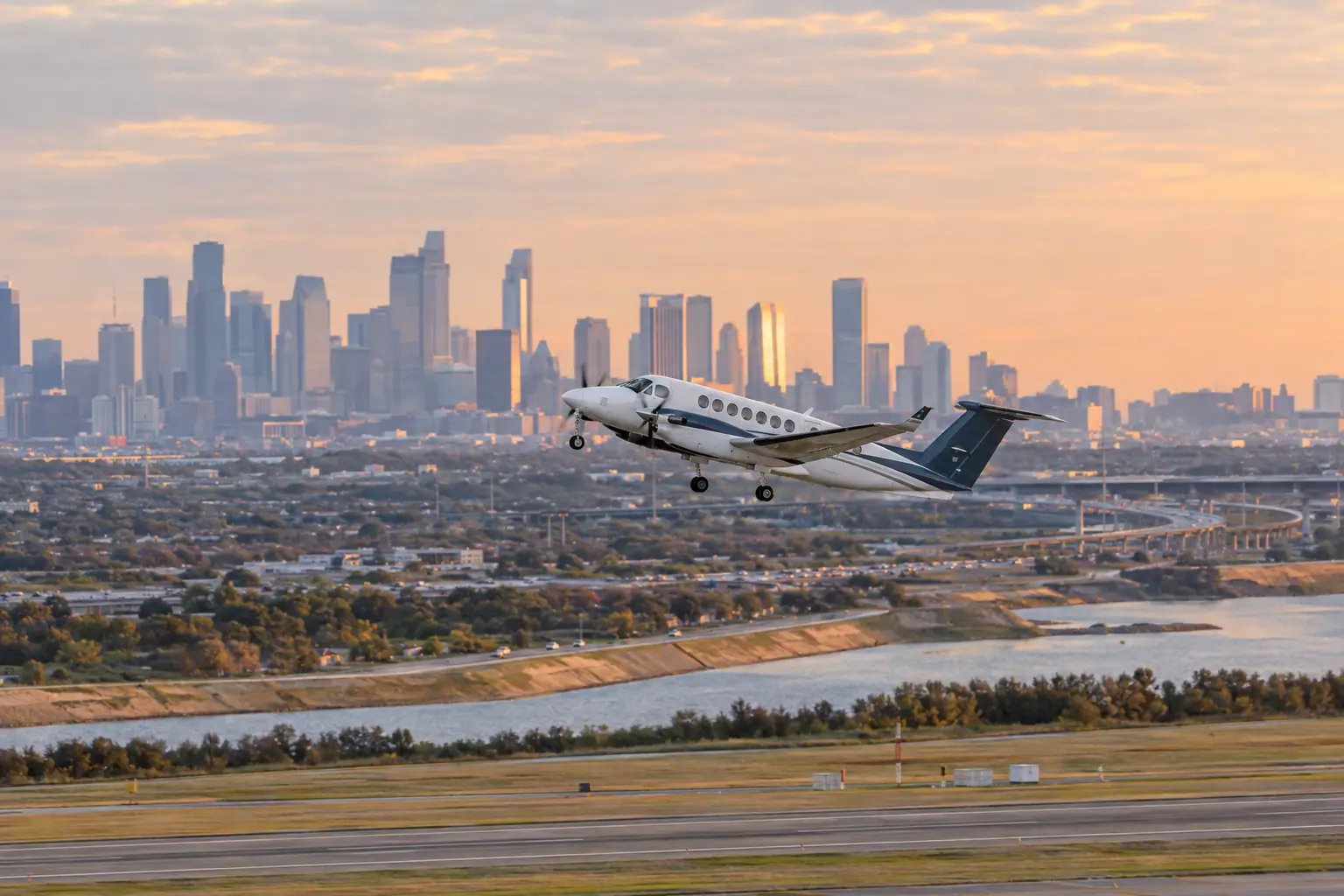
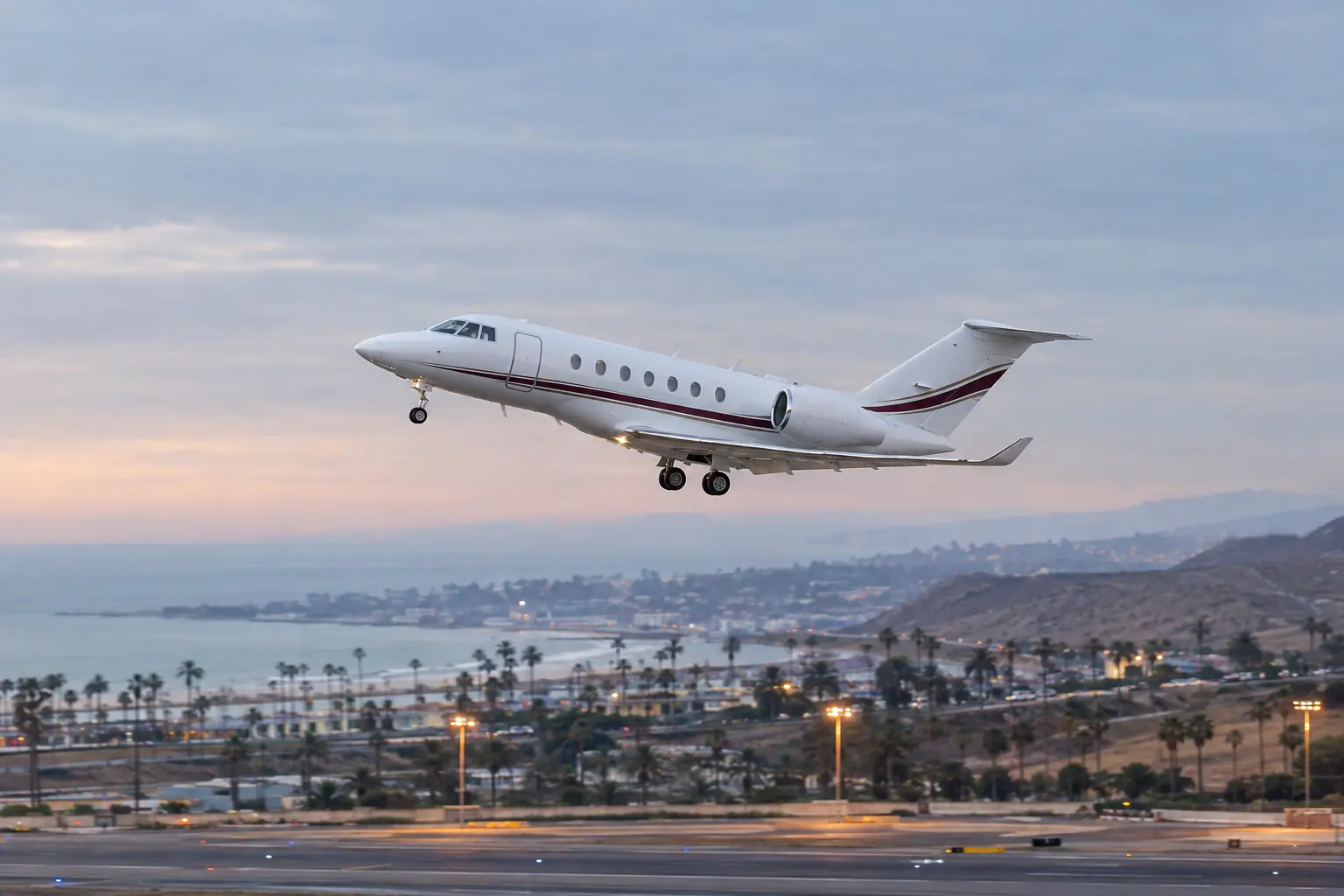
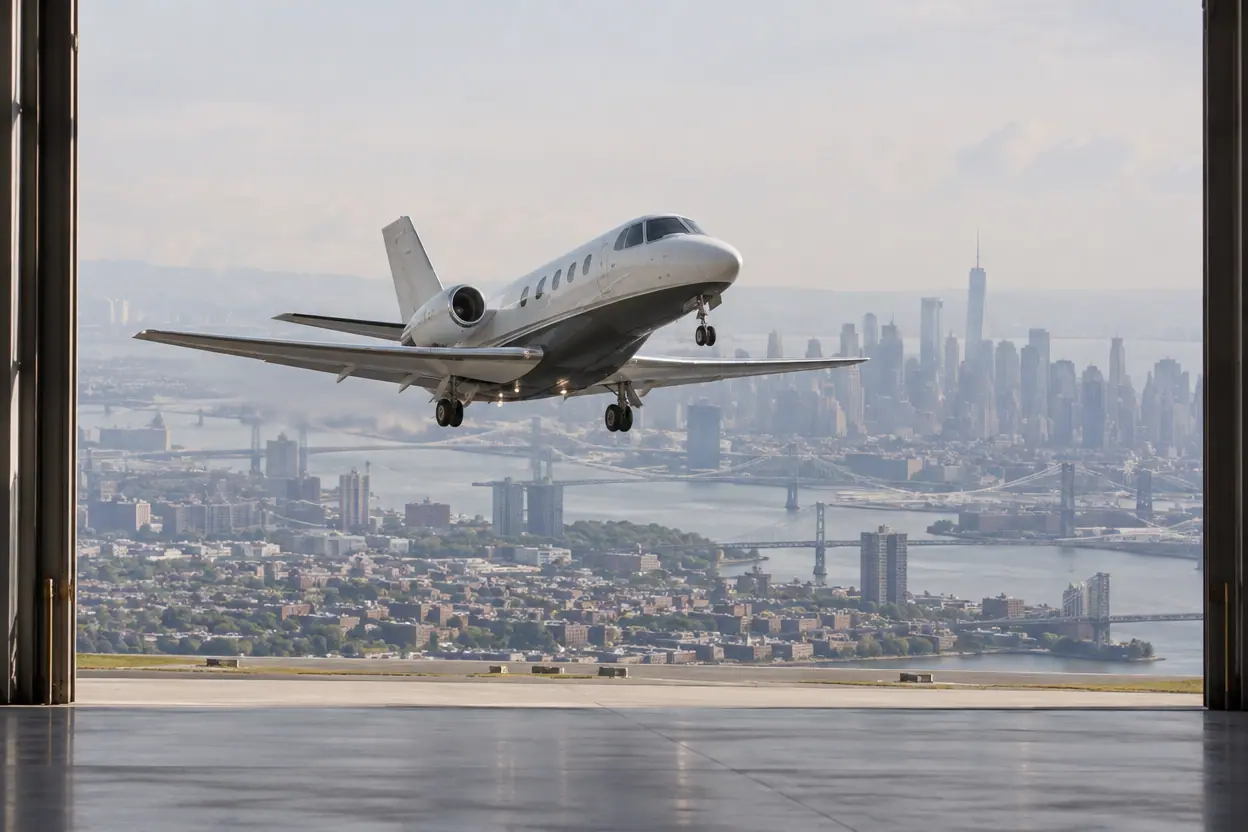
Across these 6 private jet routes the distance spans 213 to 1,230 nautical miles, and one-way light jet estimates run $4,000 to $23,500.


Questions about this airport
How much runway does private jet charter William P. Hobby require?
Hobby's longest runway is 7,602 ft at 46 ft elevation, which is enough for most light and midsize jets on regional routes. The limiting figure is density altitude, which climbs from about 300 ft in January to 2,200 ft in July and roughly 2,800 ft on a 115F peak day. Operators run performance numbers for each specific aircraft before confirming.
Which FBOs handle private jets at Hobby?
Six facilities serve general aviation: Wilson Air Center, Million Air Houston, Jet Aviation Houston, Atlantic Aviation, Signature Aviation and Henriksen Jet Center. Each operator has its own contracts, so your quote should name the FBO handling your trip. Ground time and ramp-to-terminal transfers vary by facility.
How far is Hobby from downtown Houston?
The airport is roughly seven miles southeast of downtown, reached by Interstate 45 and the Gulf Freeway. Drive times depend on traffic, and weekday rush hours on the downtown freeways can add significant time. A car service booked through your operator or broker is the usual arrangement for private passengers.
Is Hobby better than Ellington or Sugar Land for a private flight?
It depends on the mission. Ellington has a 9,001 ft runway and Sugar Land Regional has 8,000 ft, while Hobby offers 7,602 ft along with six FBOs. For light jets on regional legs, Hobby's close-in location often wins. For heavier long-haul aircraft, Ellington's longer runway gives the operator more margin.
How do summer temperatures affect departures from HOU?
July highs average 91F and August 92F, pushing density altitude to roughly 2,200 and 2,300 ft respectively. That reduces available performance, so a heavy midsize jet on a long leg may need a fuel stop or a weight reduction. Morning departures are cooler and usually easier on performance.
Who is responsible for the flight itself?
The flying is done by FAA Part 135 operators, and those operators hold operational control, including dispatch and crew decisions. Brokers arrange the trip as agents under DOT Part 295 rules. For international legs, CBP clearance is coordinated through the operator and the FBO at Hobby.